Industrial Scale Types Explained: Which One for You?
Do you find it difficult to find the weighing solution that fits your facility, only to find that one size will surely not suit all?
Companies usually make the mistake of installing the wrong industrial weighing systems, which leads to inaccurate measurements, workflow interruptions as well and expensive replacements. Prime scales provides all kinds of industrial scales, saving you time, money, and hassles in running your business.
Key Takeaways
- Your environment, load capacity, and accuracy needs determine which weighing scale fits your operation.
- The digital scales in modern industries are linked to the ERP or MES system.
- Moisture, dust, and extreme temperatures need special protective measures.
- Large load scales are not in any way similar to precision counting scales.
Understanding Your Industrial Weighing Needs
When choosing equipment, a few questions will help you out before choosing:
- What are you weighing?
- Where will you weigh it?
- What is the accuracy required of your measurement?
There is a big difference in equipment for a pharmaceutical company that counts pills and a log center that counts pallets. This is why industrial weighing solutions are offered in such a variety of setups; each of them is aimed at addressing the exact issue that you have to deal with daily.
Main Types of Industrial Scales
This is a summary of the typical types of industrial scales and how each one can be used to overcome unique weighing challenges in your work process.
Bench Scales
Bench scales include smaller loads and are ideal in quality control laboratories, packaging, and production assembly lines. They are convenient and can be used to portion and sample the products, and also in manufacturing small parts.
Counting Scales
Counting scales will come in handy when you are required to count thousands of tiny items. These computerized systems measure a sample, weigh an average, and generalize the total quantities using an amazingly precise algorithm, eradicating manual counting processes without exhausting the human factor.
Floor Scales and Pallet Scales
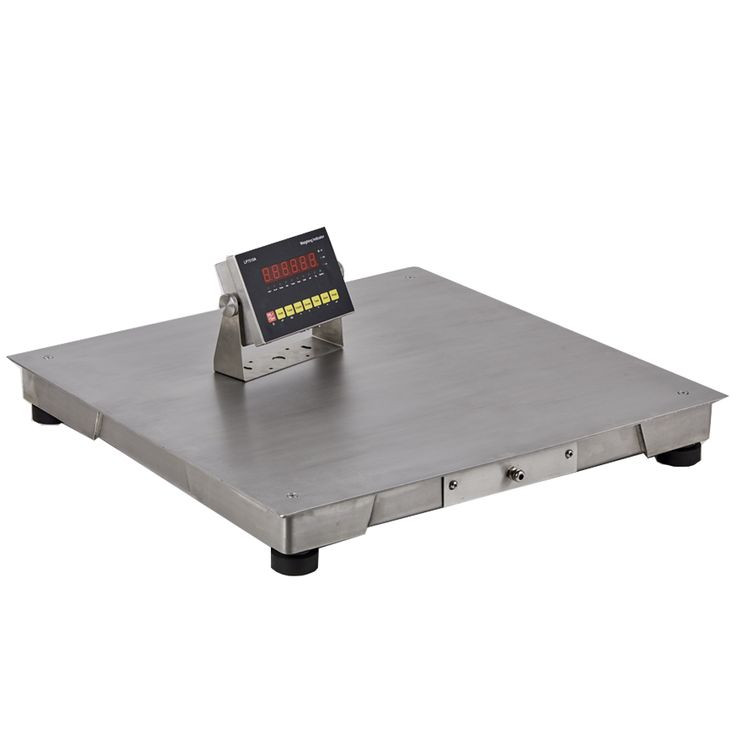
In the factory floor activities, scale floors are required during the receiving, shipping, checking, and overall weighing of goods. Pallet scales are used to weigh palletized loads in all their low-profile designs so that pallet jacks and forklifts can easily access them.
The capacity of standard forklift scales and pallet scales is different. Pallet scales are stationary, moderate to high capacity scales, but forklift scales become part of the equipment to weigh all across your facility, mobile.
Crane Scales
Crane scales suspend between crane hooks and loads, capturing weight during lifting. Industries like steel fabrication and shipping yards ensure safe lifting limits and streamlining operations by eliminating separate weighing steps.
Truck Scales
Truck scales are massive platforms that weigh entire vehicles for shipping, waste management, and commodity trading. You need these when dealing with bulk materials, managing freight logistics, or operating quarries and distribution centers where legal-for-trade accuracy determines billing.
Drum Scales
Drum scales simplify weighing large drums with cradle-style designs that prevent dangerous spills. There are even explosion-proof scales suitable for chemical plants, and many come with intrinsically safe certifications for hazardous environments, preventing electrical sparks around flammable vapors.
Postal and Shipping Scales
Postal scales deliver the accuracy needed for carrier compliance and cost control, calculating exact postage, ensuring weight limits, and integrating with shipping software for automated label printing, essential for e-commerce operations.
Automatic Industrial Scales
Automatic industrial scales integrate directly into production lines, weighing products without manual intervention. Can industrial scales integrate with ERP or MES systems? Modern automatic scales communicate via Ethernet, Bluetooth, or industrial protocols, feeding real-time weight data into your business systems for automated inventory tracking and quality control.
Wireless Scales
Wireless scales eliminate cable tangles by transmitting data via Bluetooth or Wi-Fi to remote displays. This flexibility proves valuable in large warehouses, multi-scale operations, and harsh environments where cable damage is common.
Environmental Considerations
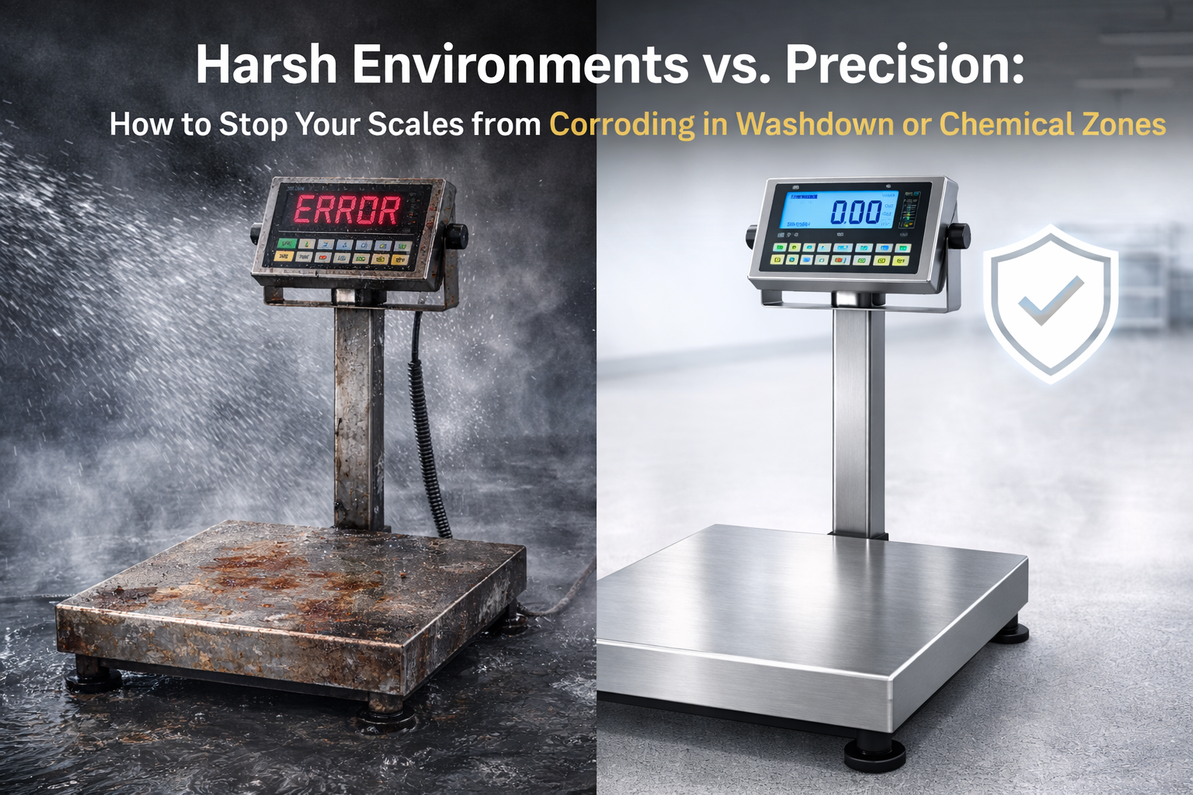
Environmental exposure affects a scale’s performance dramatically, and a standard scale will fail quickly in dusty or humid environments. IP ratings tell you what a scale can handle:
- IP65: Dust-tight, water jet protected, suitable for most indoor industrial use
- IP67: Dust-tight, submersible, ideal for washdown environments
- IP69K: Complete protection for high-pressure washdown in pharmaceutical cleanrooms
Temperature extremes also matter. Standard load cells drift in accuracy when exposed to cold or extreme heat.
Making the Right Choice
Choose your industrial digital scale by working through these decision points:
- Capacity needs: Find out your highest load with a margin. Do not use scales on their highest range frequently to have the best life span.
- Precision: Legal-for-trade applications require NTEP-certified scales
- Physical limitations: Determine space limitations, platform size, height limitations, and accessibility of maintenance.
- Environmental protection: Use IP ratings that match your reality- Specifying too high will cost you more, but specifying too low will lead to early failure.
- Integration requirements: Determine what systems require weight data and make sure that the system is compatible at the time of purchase.
Conclusion
The process of choosing the appropriate industrial weighing scale does not involve searching to find the highest priced one rather one that aligns with your business problems.
Learning about these kinds will assist you to invest in a wise manner, may it be the accuracy of counting scales, the ability of truck scales or even the combination of automated systems.
The first one is to evaluate your surroundings and capacity and accuracy requirements, and the second one is the way the scales will interface with the systems you already have and the protection aspect your conditions require.
Frequently Asked Questions
1. What are the main types of industrial scales, and where are they best used?
The key ones are bench scales, floor scales, pallet scales, truck scales, crane scales and counting scales.
2. How do you choose the right industrial scale for a warehouse?
Your top priorities should be platform size to comply with your largest loads, be compatible with your warehouse management system, and have maximum capacity with a safety margin.
3. What is the difference between platform scales and floor scales?
Although they serve similar purposes, platform scales can be smaller and more semi-portable, whereas floor scales usually refer to larger, permanently installed units.
4. Can industrial scales integrate with ERP or MES systems?
Yes, modern scales can directly feed real-time weight data into business systems using Ethernet, USB, as well as wireless protocols.
5. How does environmental exposure affect scale performance and longevity?
The dust fills the mechanisms, the moisture leads to corrosion, and the extreme temperatures of the temperature influence the load cells' accuracy, which needs proper IP ratings and temperature-compensated parts to operate successfully.
Recent Posts
-

Harsh Environments vs. Precision: How to Stop Your Scales from Corroding in Washdown or Chemical Zones
Does your weighing equipment fail every few months? It is frustrating. You buy a new scale. It work …27th Feb 2026 -
What to Do When Your Industrial Scale Fails: Troubleshooting Guide
Have you ever experienced your weighing scale stop working in the middle of your shift? Nothing stop …27th Feb 2026 -
Everything You Must Know to Ensure Industrial Scale Compliance and Avoid Costly Fines
Did you know one bad scale reading can get you fined? It's true. Many businesses mess up their scale …3rd Feb 2026