Maintenance Playbook for Industrial Scales: Preventive, Predictive, and Corrective Maintenance
Are your industrial scales costing you money? One hour of downtime can stop your entire production line. Most companies wait for problems instead of preventing them.
Running industrial scales in a warehouse, factory, or logistics center requires smart maintenance. Understanding the three types, preventive, predictive, and corrective, keeps your scales accurate and profitable.
Key Takeaways
- Preventive maintenance uses fixed schedules to catch problems early.
- Predictive maintenance watches real-time data to extend equipment life.
- Corrective maintenance fixes failures after they happen at a higher cost.
- Using all three approaches together creates the best strategy.
Understanding Industrial Scale Degradation
Your industrial weighing systems change constantly. Every load, temperature shift, or dust particle causes tiny changes in load cells. After six months, these small changes become big accuracy problems.
Why Accuracy Drift Happens
Environmental factors speed up damage:
- Temperature swings over 10°C make metal parts expand and contract.
- Moisture gets inside the load cells and creates electrical problems.
- Vibrations from nearby machines loosen connections over time.
- Corrosive materials eat away at protective coatings.
One chemical plant found their scale was off by half a percent. They lost tons of material each year. A quarterly check would have caught it.
Preventive Maintenance: Your Foundation for Reliability
Preventive maintenance for industrial weighing solutions means checking your scales on a regular schedule. You do it based on calendar dates or usage hours.
|
Maintenance Frequency |
Activity Type |
Key Actions |
Purpose / Outcome |
|
Daily |
Visual Inspection |
Check for debris on the platform, bent or damaged cables, and visible physical damage |
Identify obvious issues early and prevent measurement errors |
|
Weekly |
Functional Check |
Press zero, place a known test weight on the scale, and verify the displayed reading |
Ensure the scale is providing accurate readings |
|
Monthly |
Preventive Maintenance |
Perform deep cleaning of the scale and conduct corner testing |
Maintain consistent accuracy and prevent buildup-related issues |
|
Quarterly |
Professional Inspection |
Certified technician checks calibration using certified weights and inspects load cells for moisture and wear |
Ensure compliance, accuracy, and long-term reliability of the weighing system |
Predictive Maintenance: The Smart Way to Save Money
Predictive maintenance for industrial equipment watches your scale's condition. You only do maintenance when the data says it's needed.
1. How Predictive Systems Work
Modern systems use several tools:
- Vibration sensors find bearing wear and mounting problems
- Temperature monitors spot electrical issues early
- Load cell analysis tracks how readings drift over time
- Smart algorithms predict failures weeks ahead
When sensors show problems consistently, they warn you about moisture or metal damage.
2. Cost Savings and ROI
How can predictive maintenance save money for industrial-scale owners? It saves significantly compared to other methods. Most companies get their money back within 6-18 months. Equipment lasts 20-40% longer.
You need sensors, software, and training. This works best for busy production lines, industrial digital scale systems in tough places, and heavy-duty scales.
Corrective Maintenance: When Prevention Fails
Corrective maintenance is fixing industrial-scale repair problems after they break. This approach makes sense for backup equipment and rarely-used portable industrial scales.
The True Cost of Reactive Repairs
When fixing breaks becomes your main plan, costs go up fast. Emergency work costs more. Rush shipping costs more. Overtime pay costs more. Production stops and shipments get delayed. Simple checks could have prevented most problems.
Minimizing Emergency Situations
Smart companies reduce emergencies. They use strong preventive programs and add predictive monitoring to valuable equipment. Keep records to spot patterns. Stock spare parts. Partner with certified scale calibration services for quick help.
Building Your Custom Maintenance Schedule
When should I schedule preventive maintenance for my industrial scales? Start by sorting your equipment by importance.
Equipment Priority Levels
Critical scales include main production weighing systems and quality control points. Sort your equipment:
- High priority: Daily-use scales need checks every three months.
- Medium priority: Backup stations require checks twice a year.
- Low priority: Rarely-used scales need yearly checks.
Frequency Guidelines
For industrial weighing scale operations used daily in tough conditions, get professional checks every three months with weekly accuracy tests. Medium-use equipment needs checks twice yearly. Light-use scales in clean areas can wait a full year.
Environmental and Regulatory Factors
Change your schedule based on conditions. Extreme temperatures need more frequent checks. Dusty places need weekly cleaning. Industry rules set minimums. Commercial scales need yearly legal checks. Pharmaceutical companies need monthly checks.
Preventing Downtime Through Smart Maintenance
How can I prevent downtime with proper industrial scale maintenance? Your production team is your first defense.
Operator Training and Responsibility
Make simple checklists for each shift. Teach workers to spot warnings:
- Jumping numbers: Readings change without load changes
- Strange sounds: Grinding or squeaking noises
- Visible damage: Cracks or rust on platforms
- Display problems: Screen acts weird or won't settle
Finding problems early means you fix them on your schedule.
Proactive Problem Prevention
Weekly checks with test weights stop costly drift. Keep weights that match your normal loads. Write down all readings. Fix small problems right away.
That loose cable will break during your busiest time. Keep spare load cells and cables in stock.
The Hybrid Approach: Maximum ROI
The real question isn't picking one type. It's using all three smartly.
Layering Your Strategy
Top companies stack their approaches:
- Foundation layer: Preventive maintenance for routine cleaning.
- Intelligence layer: Predictive monitoring on critical heavy-duty scales.
- Acceptance layer: Corrective maintenance for non-critical portable industrial scales.
Use preventive maintenance as your base. Add predictive monitoring to mission-critical equipment.
Measurable Results
Companies using combined approaches see major improvements. Unplanned downtime drops. Maintenance costs fall. Equipment lasts longer. Check your equipment importance each year. It's a competitive edge.
Conclusion
Your industrial scales are the foundation of accurate work and profits. Preventive maintenance creates reliability. Predictive maintenance adds smarts by watching real conditions. Corrective maintenance handles unavoidable failures.
Do three things now. First, look at your current approach. Second, schedule checks for scales not serviced in six months. Third, start daily visual checks with weekly accuracy tests. If you are looking for quality industrial scales for sale, visit Prime Scales.
Frequently Asked Questions
1. What's the difference between preventive, predictive, and corrective maintenance?
Preventive maintenance follows fixed schedules. Predictive maintenance uses sensors to fix only when needed. Corrective maintenance fixes break after they happen and cost more.
2. How does predictive maintenance of industrial scale save money?
It stops unnecessary visits and catches problems early. Most companies recover costs within 6-18 months through less downtime.
3. How much does industrial-scale maintenance cost?
Preventive has predictable costs. Emergency repairs cost much more. Predictive needs upfront investment but saves long-term.
4. When should I schedule preventive maintenance for my industrial scale?
High-use scales need quarterly checks. Medium-use needs to be used twice yearly. Low-use can wait annually. Follow maker guidelines.
5. How can I prevent downtime of my industrial scale?
Do daily inspections and weekly accuracy checks. Fix small issues immediately. Keep spare parts stocked and schedule maintenance during slow periods.
Recent Posts
-

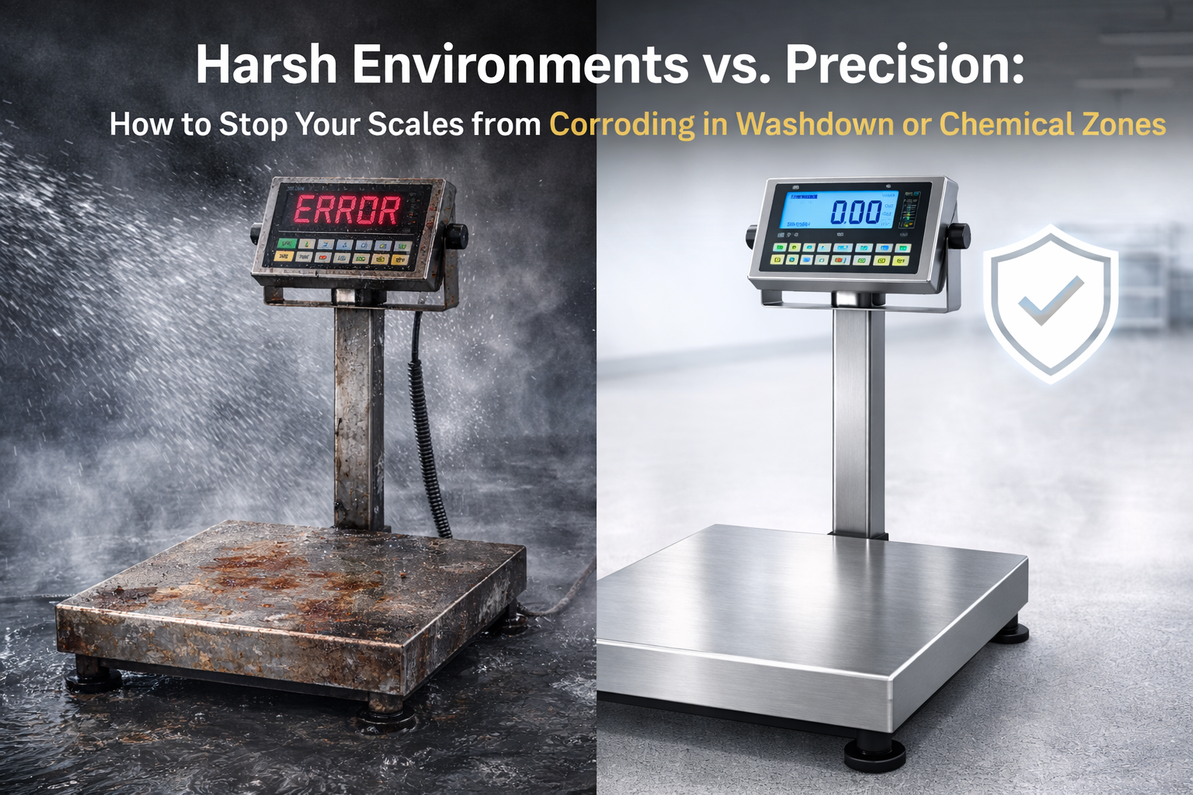
Harsh Environments vs. Precision: How to Stop Your Scales from Corroding in Washdown or Chemical Zones
Does your weighing equipment fail every few months? It is frustrating. You buy a new scale. It work …27th Feb 2026 -
What to Do When Your Industrial Scale Fails: Troubleshooting Guide
Have you ever experienced your weighing scale stop working in the middle of your shift? Nothing stop …27th Feb 2026 -
Everything You Must Know to Ensure Industrial Scale Compliance and Avoid Costly Fines
Did you know one bad scale reading can get you fined? It's true. Many businesses mess up their scale …3rd Feb 2026