The Ultimate Guide to Industrial Scales: Types, Selection, Calibration, and Maintenance for Reliability and Compliance
You have just sent a container ship with incorrect weight. And now you have lawsuits and holdups. Or your production line is just stopping as your scale displays error codes.
Measurements in the wrong direction result in fines, lost stock, customer dissatisfaction, and wasted time, especially if your scales have not been adjusted for months and no one has trained your team on maintenance.
The majority of issues in scale are preventable. It’s recommended to always go for NTEP-certified scales. When you know the types, selection, calibration, and maintenance. This will save you time, effort, and money.
Key Takeaways
- Choosing the wrong scale type leads to expensive mistakes within months
- Proper calibration prevents accuracy drift and compliance issues
- Preventive maintenance extends the scale's life and reduces emergency repairs
- Understanding legal compliance protects your business from fines
Industrial Scales And Their Types
An industrial scale is a type of weighing equipment designed for heavy-duty applications in various industries such as manufacturing, logistics, agriculture, and retail. These scales come in different types, including platform scales, bench scales, and truck scales, each tailored for specific tasks. They are commonly used in factories, warehouses, and logistics depots to accurately weigh large items and ensure efficient operations.
Not all scales are built for the same purpose. Using a bench scale for pallets will break it. Using a truck scale for small parts wastes money.
- Bench Scales sit on workbenches and handle packages, ingredients, or parts up to a few hundred pounds. Perfect for shipping, food prep, and quality control.
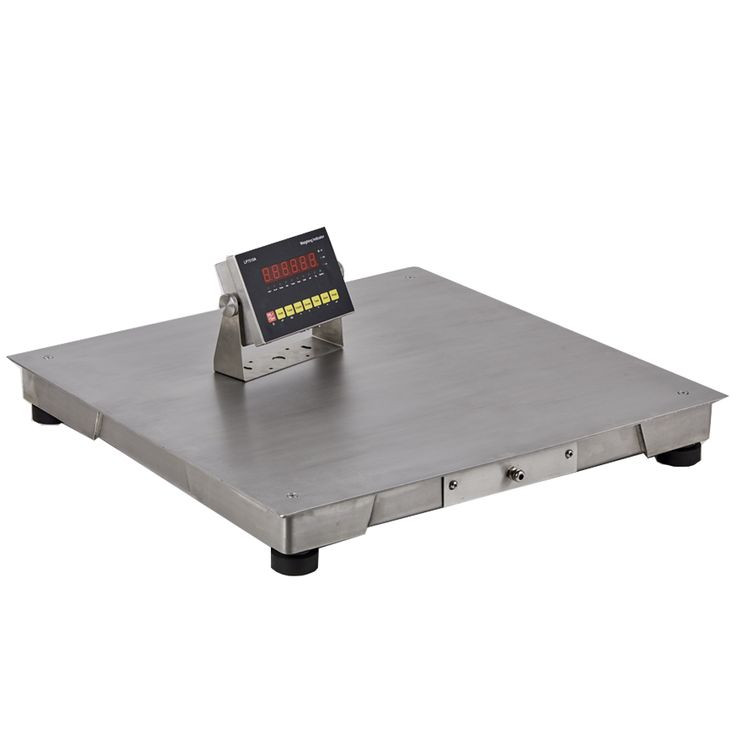
- Floor Scales are larger platforms for pallets, drums, and carts. Built for warehouses and manufacturing. They handle hundreds to thousands of pounds.
- Truck Scales weigh entire vehicles at ground level or in pits. Essential for logistics, recycling, and agriculture.
- Portable Industrial Scales move where you need them. Instead of bringing items to the scale, you bring the scale to the items.
- Counting Scales calculate quantities based on sample weights. You weigh a sample, and the scale counts thousands of parts automatically.
- Crane Scales suspend and weigh items from above. Used in construction and heavy manufacturing, where items can't sit on platforms.
Most modern industrial digital scales use electronic load cells. They're accurate, reliable, and offer data storage and connectivity.
Choosing The Right Type of Scales for Your Business
Three out of four companies choose the wrong scale the first time. They replace it within eighteen months. You must look for the following key features when buying one
1. Capacity
What's your heaviest item? Add buffer. A scale loaded near maximum wears out faster. If your heaviest load is eight thousand pounds, don't buy a five-thousand-pound scale.
2. Accuracy
The accuracy of industrial weighing systems matters the most because some sectors demand it. For pharmaceuticals, the production requires accuracy to the gram. Greater accuracy is more expensive, whereas inaccuracy is yet more expensive.
3. Environment
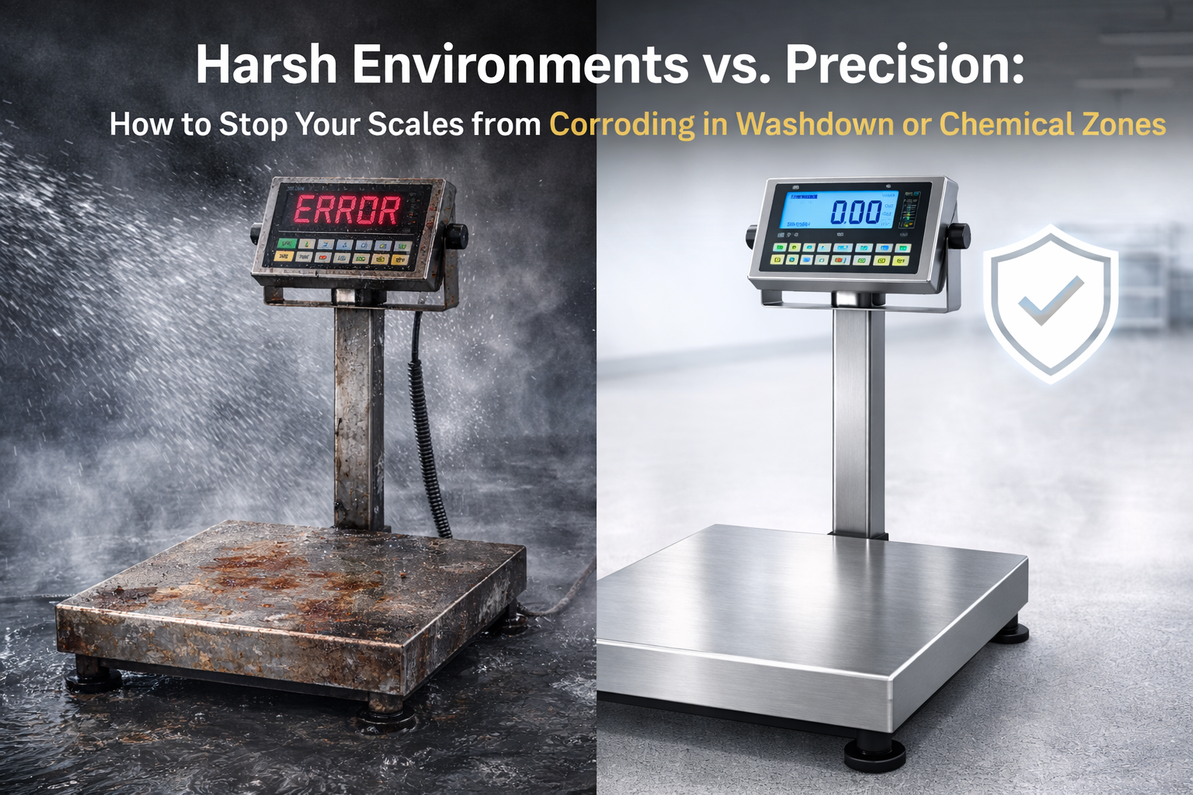
Will the scale be placed in a warehouse where the environment is clean or close to water and chemicals? Performance is influenced by temperature changes, moisture, dust, and vibration. Scales of increased IP rating are more resistant to damage.
4. Connectivity
The latest industrial weighing systems are connected to the inventory software, printers, and databases. This lowers the number of errors in manual entry and accelerates operations.
5. Compliance
In case you do sell by weight or make use of scales in commercial dealings, you should be legally-for-trade certified. There are huge fines that may be imposed for using non-certified scales.
6. Portability
Fixed scales offer stability and higher capacity. Portable options provide flexibility. Consider your workflow.
Don't choose on price alone. A cheap scale that breaks costs more than a quality scale that lasts.
Top Mistakes to Avoid When Buying an Industrial Scale
Here are the top things to watch out for:
- Buying on price alone: Cheap scales break faster, lose calibration quicker, and lack support. Calculate the total cost of ownership.
- Underestimating capacity: Add twenty to thirty percent buffer above your heaviest expected weight.
- Ignoring environment: Standard scales fail in harsh conditions. Match the scale to its working environment.
- Overlooking legal requirements: If money changes hands based on weight, you need NTEP certification.
- Forgetting connectivity: Verify compatibility with your systems before buying.
- Skipping warranty review: Check coverage duration, what's included, and who pays shipping.
- Choosing the wrong type: Match the scale type to your actual weighing tasks.
- Neglecting training: Ensure your supplier provides setup assistance and technical support.
- Forgetting installation: Plan installation logistics before the scale arrives.
- Ignoring calibration costs: Some scales require expensive professional service. Factor this into your budget.
When buying an industrial scale, it’s important to avoid common mistakes that can cost you time and money.
Troubleshooting Guide for Industrial Scale Fails
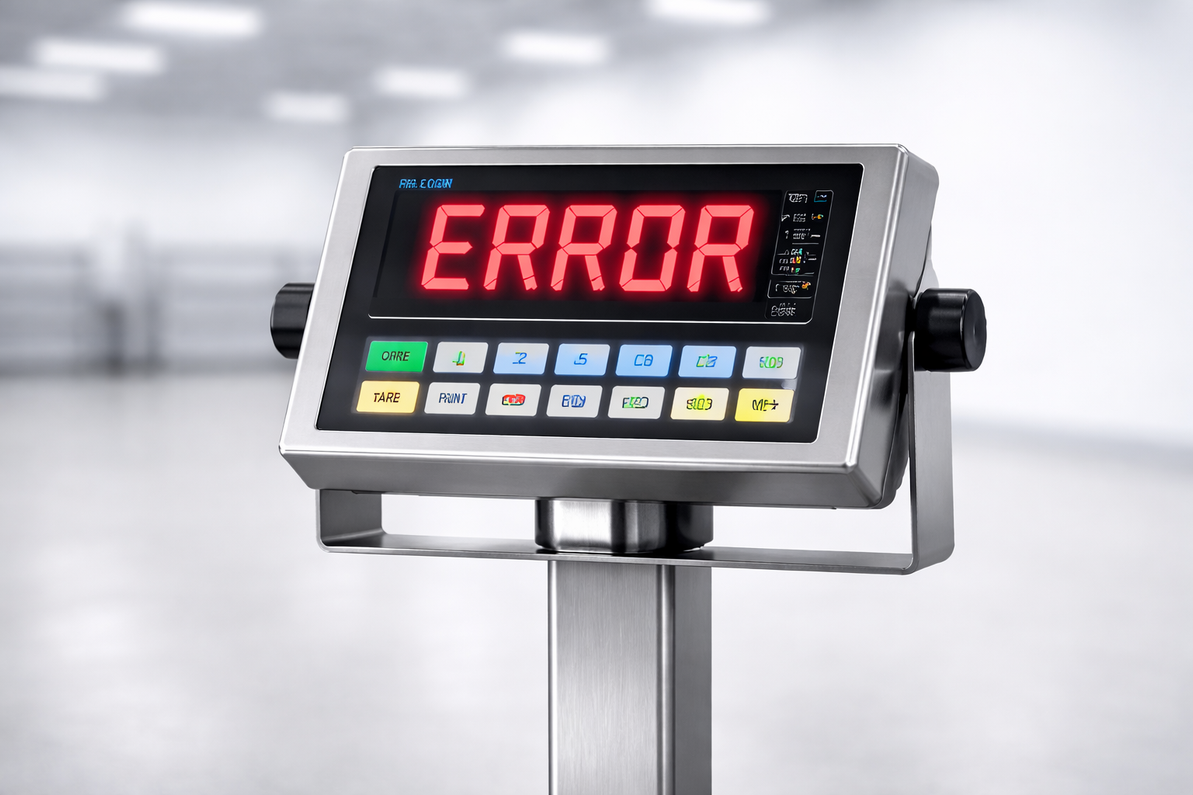
When the power source does not start on an industrial scale, make sure that the power source, the cord, batteries, the fuse, and the breakers are checked. In the case of error codes, consult the manual. To eliminate inaccurate readings, one can correct the scale by cleaning it and recalibrating it with certified weights, and making sure that the scale is in a level position and there are no interferences.
In case the scale is not going to stabilize, eliminate vibrations and prevent air currents. Weight reading zero might involve the removal of shipping screws and load cell checking. Seek professional advice in case of continuing problems or damage to load cells or electronics. Routine cleaning will serve to avoid major problems and maintain the scale correctly.
Certified Industrial Scale Calibration Checklist
Calibration keeps your scale honest. Without it, accuracy drifts, inventory gets miscounted, and shipments get rejected.
- Determine Need: Watch for signs like zero not changing when you add weight, display fluctuating wildly, or known weights showing incorrect readings.
- Prepare Environment: Stable temperature, no vibrations, no air currents. Level surface. Clean debris from under the platform.
- Select Calibration Weights: Use certified test weights only. Most scales need weights equal to at least twelve percent of capacity. Never use random objects.
- Access Calibration Mode: Navigate to your indicator's setup menu. Look for "Platform Setup" or "Span Calibration."
- Zero the Scale: With nothing on the platform, ensure the display reads zero. This sets the baseline.
- Apply Test Weights: Place certified weights systematically. Start low and work up. The scale should display exact weight values.
- Adjust and Verify: Input correction factors through the indicator. Remove and reapply weights to verify. Test at multiple capacity points. Perform corner tests.
- Legal-for-trade calibration: Only certified technicians can calibrate scales for commercial transactions. They use state-approved weights and provide documentation.
Calibration frequency depends on usage. Heavy-use scales in demanding environments need monthly calibration. Light-use scales might go quarterly.
Maintenance Steps Playbook for Industrial Scales
These maintenance steps extend the life of industrial weighing solutions, reduce breakdowns, inaccurate readings, and emergency repairs.
1. Preventive Maintenance
Look at your scale every day to confirm that it has not been damaged and remove any debris, ensure that the display is on, and that it is at zero. Test weekly using known weights and check cables and mounting hardware.
Clean thoroughly once a month and inspect load cells for cracks or corrosion, ensure it is on its level, and tighten bolts. Get it calibrated regularly by a professional every few months, clean hard-to-reach areas, change worn-out components, and upgrade the software. This is a basic routine that helps keep your scale on track.
2. Predictive Maintenance
Watch for warning signs:
- Readings drift after zeroing
- Display flickers or shows incomplete digits
- Scale takes longer to stabilize
- Unusual noises during weighing
- Error codes appear frequently
- Corners show different readings
3. Corrective Maintenance
Test the power and connections, check the outlet, and check on the damaged cords or dead batteries. Wash the scale and clean the debris off. Do not keep it on an uneven surface; ensure the load cells are not broken.
Be aware of moisture, vibrations, and extreme temperatures. Any exposure to water should be dry, and all connections tightened so that the scale can work well and accurately.
Everything to Ensure Industrial Scale Compliance
Compliance protects your business. Violations lead to fines and legal problems.
Legal-for-trade certification applies when you sell by weight, charge by weight, or conduct commercial transactions involving weight. Your scale must meet NIST Handbook 44 standards and carry NTEP approval.
Who needs certification:
- Retail stores selling by weight
- Shipping companies charge by weight
- Recycling facilities buy scrap
- Agricultural operations
- Food processors
- Any business where weight determines pricing
1. Requirements
Scales must pass NTEP testing. Only certified technicians can calibrate for trade. Seals must remain unbroken. Records must be maintained. Annual inspections verify compliance.
2. Documentation
Keep calibration certificates. Maintain service records. Document repairs. Provide proof of certification on request.
3. Consequences
Fines starting at thousands of dollars. Legal liability. Loss of licenses. Customer lawsuits. Criminal charges in severe cases.
Stay compliant by buying NTEP-certified heavy-duty scales. Use only certified calibration services. Never break seals. Keep detailed logs. Respond immediately to inspection failures.
Smart Industrial Scales with Connectivity & IoT Transform Operations
The contemporary industrial weighing systems are integrated, communicating, and connecting. They are linked together and transmit weight data to systems in real time and without any human error. They can also be used to provide remote monitoring, issue calibration or error alerts, and have a smooth interface with other software such as ERP and warehouse management systems, accelerating operations and increasing precision.
These scales assist in automating the processes through the weight-based action, predictive maintenance to prevent downtime, and data to be used in analytics to optimize and monitor performance. In general, they improve reliability, time, and productivity in the industry.
Conclusion
Industrial weighing solutions are critical tools. Wrong measurements ripple and disturb your entire operation, resulting in waste, complaints, fines, and costs.
Understand the types and choose the right scale for specific needs. Implement proper calibration procedures.
Most problems are preventable. Review your current scales. Are they appropriate? Properly calibrated? Correctly maintained? If not, you're risking problems.
You can find good-quality industrial scales for sale from reliable suppliers like Prime Scales. Combined with proper care, create reliable systems that support your business. Investment in proper industrial weighing systems pays for itself through prevented errors, increased efficiency, and avoided penalties. Start making better decisions today.
FAQs
1. Do I need to calibrate a new scale right out of the box?
Yes, always calibrate upon arrival, as factory calibration doesn't account for your location's elevation and conditions.
2. What's the difference between legal-for-trade and regular industrial scales?
Legal-for-trade scales are NTEP certified in the conduct of commercial transactions; trade on uncertified scales attracts significant fines.
3. How often should industrial scales be professionally calibrated?
It depends on usage and environment, but quarterly calibration with weekly spot checks works for most operations.
4. Can I use any weights to calibrate my scale?
No, you must use certified calibration weights that meet NIST standards, especially for legal-for-trade applications.
5. What are the first signs my scale needs immediate attention?
Watch for drifting readings, error codes, unstable displays, or readings that vary significantly by corner placement.
Recent Posts
-

Harsh Environments vs. Precision: How to Stop Your Scales from Corroding in Washdown or Chemical Zones
Does your weighing equipment fail every few months? It is frustrating. You buy a new scale. It work …27th Feb 2026 -
What to Do When Your Industrial Scale Fails: Troubleshooting Guide
Have you ever experienced your weighing scale stop working in the middle of your shift? Nothing stop …27th Feb 2026 -
Everything You Must Know to Ensure Industrial Scale Compliance and Avoid Costly Fines
Did you know one bad scale reading can get you fined? It's true. Many businesses mess up their scale …3rd Feb 2026