7 Proven Ways to Stop Industrial Scale Corrosion in High-Moisture Washdown Zones
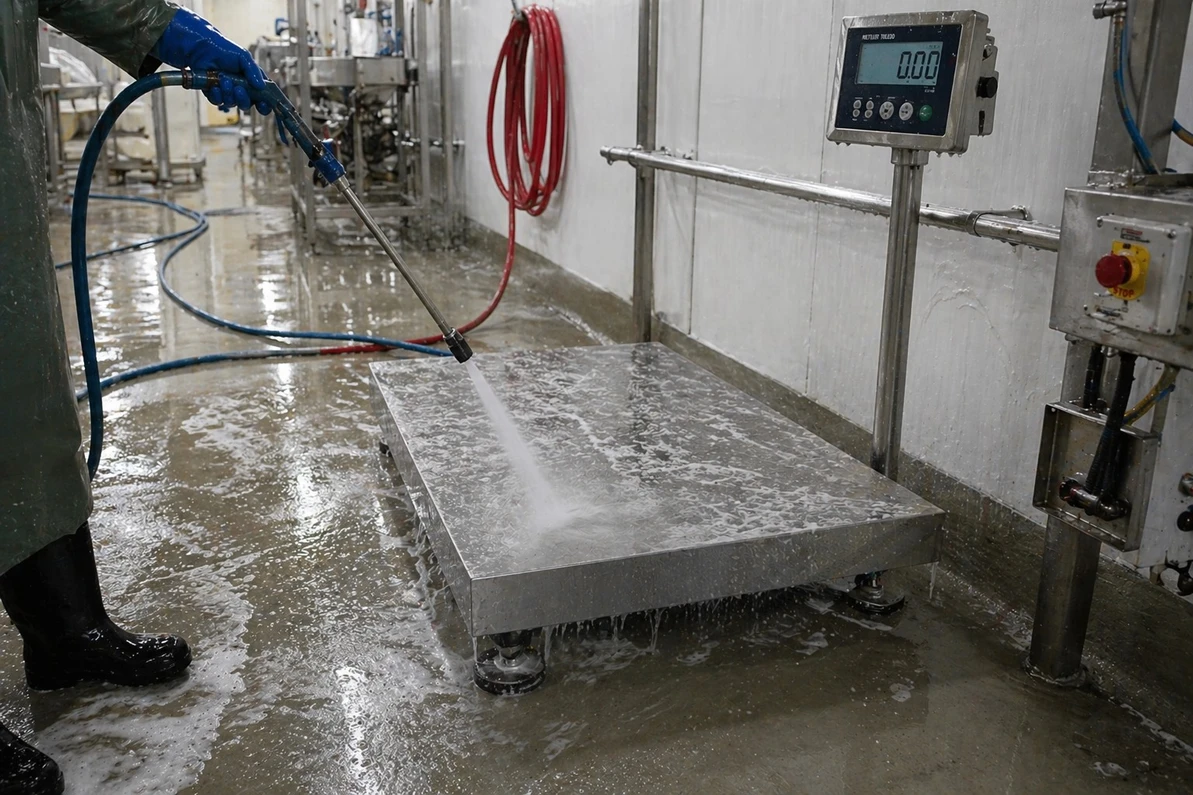
Your scale looked fine last month. Now rust is creeping under the platform, readings are drifting, and your maintenance team has no answers. In washdown zones, corrosion does not announce itself. It works quietly, through joints, cable entries, and coatings never built for daily hosing.
Industrial scales in food processing, pharmaceuticals, and chemical plants face harsh conditions every single day. This guide gives you seven proven ways to stop that damage before it kills your equipment and your accuracy.
Key Takeaways
- Stainless steel alone does not protect industrial scales from corrosion in washdown zones.
- Galvanic corrosion, pitting corrosion, and surface oxidation each need a different fix.
- The right coating, seal, and IP rating together form your real defense.
- Most corrosion damage starts at joints, feet, and junction boxes, not the platform surface.
1. Match Your Scale to the Environment First
Most corrosion problems start before the scale is even installed. The wrong scale in the wrong environment will fail, it's only a matter of time.
Industrial corrosion protection starts with selection, not maintenance. Always match the equipment specification to your actual floor conditions.
Know Your Corrosion Type
Not all corrosion looks the same. Each type needs a different fix. Galvanic corrosion happens when two different metals touch in a wet environment. One breaks down faster. You often won't see it until real damage is done.
Pitting corrosion forms small deep holes under the surface. It's common in high moisture environments and easy to miss visually. Surface oxidation is the most visible type. You'll see it as rust staining on your industrial weighing scale platform.
2. Demand IP69K Rating, Not Just "Waterproof"
This is where most buyers get burned. A "waterproof" label means nothing without a certified rating behind it. IP69K rating is the level you need for high-pressure washdowns. It means the equipment handles hot water jets and direct spray without letting water inside. Anything below IP69K in a true washdown zone is a risk.
All washdown environment equipment should carry this rating, the scale body, the indicator, and the junction box. Check every component. Not just the platform.
3. Seal Every Entry Point
Water does not need a large gap to get inside. A pinhole in a cable gland or an unsealed bolt hole is enough.
Industrial washdown enclosures protect your scale electronics, but only when every entry point is properly sealed. Focus on these three spots:
- Cable glands: use IP-rated glands and replace them if they crack.
- Junction box lids: inspect the gasket seal and replace annually.
- Platform bolt holes: seal with food-grade epoxies rated for wet environments.
4. Apply the Right Protective Coating
Bare metal in a washdown zone will corrode. A good coating puts a barrier between your scale and the damage.
Epoxies bond hard and resist impact. Polyurethane sealants stay flexible and won't crack when temperatures change. In a high-moisture environment, use both. An epoxy base followed by a polyurethane topcoat outperforms either one alone.
Choose Chemical-Resistant Coatings
Chlorine sanitizers, quaternary ammonia, and acidic degreasers attack standard coatings fast. Chemical-resistant coatings for industrial washdown environments must be tested against your specific cleaning chemicals, not just water. Ask your supplier for a compatibility chart before applying anything.
5. Use Stainless Steel Passivation
Stainless steel is not immune to corrosion. Many facilities learn this when rust spots appear within months of installation.
The process of stainless steel passivation removes free iron from the surface and rebuilds the protective oxide layer. Without it, your scale stays vulnerable, especially in chlorine-rich environments. Passivate before first use and re-treat annually in heavy washdown zones.
6. Protect Against Thermal Shock
Your scale runs hot from production. Then a cold hose hits it during COP (Clean-Out-of-Place) cleaning. That sudden temperature drop is thermal shock.
Thermal shock cracks coatings, seals, and gaskets over time. It also stresses load cell housings and opens micro-gaps for moisture. Let equipment cool before washdown when possible. Apply an industrial moisture barrier at seams and joints when thermal cycling cannot be avoided.
7. Build a Monthly Inspection Routine
Even the best protection fails without regular checks. Industrial weighing systems in washdown zones need a structured routine, not just a look when something breaks.
Check these three areas every month:
- Platform underside: rust spots, coating chips, or standing moisture
- Load cell housings: cracks or moisture around cable entries
- Junction box interior: open quarterly and check for condensation on terminals
Corrosion Protection at a Glance
|
Protection Method |
What It Targets |
How Often |
|
IP69K rated equipment |
Water and pressure ingress |
Verify at purchase |
|
Stainless steel passivation |
Pitting and surface corrosion |
Annually |
|
Epoxy and polyurethane coatings |
Moisture and chemical attack |
Inspect every 6 months |
|
Junction box gasket seals |
Water ingress at electronics |
Replace annually |
|
Cable gland seals |
Water entry at wiring |
Inspect monthly |
|
Thermal shock protocol |
Coating and seal cracking |
Before every washdown |
An Honest Warning Before You Act
No coating, seal, or rating makes a scale completely immune to corrosion. Every protection method has limits.
Even IP69K-rated industrial weighing solutions degrade faster when cleaning chemicals are more aggressive than the materials are rated for. Always cross-check chemical compatibility, not just water resistance.
Some industrial scales for sale marketed as "washdown-safe" carry that label based on the platform only. The load cells, wiring, and indicator may not share the same rating. Ask for full system certification.
The best anti corrosion coating for washdown environments is only as good as the surface prep underneath it. A coat applied over oxidized metal will peel within months. Clean, prepare, then coat. Always work in that order.
Conclusion
Corrosion in washdown zones is predictable. That means it is also preventable. The facilities that keep their industrial weighing solutions running accurately for years are systematic. They chose the right equipment, applied the right protection, and checked it on a schedule.
Three steps to take right now:
- Audit your scale ratings and confirm IP69K on every component, not just the platform.
- Schedule a full inspection this week. Focus on junction boxes, cable glands, and platform undersides.
- Review portable industrial scales and heavy duty scales built for your specific washdown environment before your next purchase.
Corrosion does not wait. And neither should your protection plan.
Frequently Asked Questions
1. How do I stop moisture from forming inside my scale’s enclosure if it isn't leaking?
Use desiccant packs or breathable vents to manage humidity caused by internal temperature swings. These allow air to circulate while blocking liquid water from entering the electronics.
2. Can I use high-pressure steam to clean an IP69K rated scale?
Steam can often exceed the temperature limits of seals even if the pressure rating is high. Always check the specific temperature threshold of your load cells before using steam to avoid seal warping.
3. Can heavy floor vibration cause my waterproof seals to fail?
Continuous vibration can loosen cable glands and fatigue rubber gaskets, creating tiny paths for water ingress. Periodically check the tightness of all entry points if your scale is located near heavy machinery.
4. Can I apply a thin layer of oil to prevent rust between washdown cycles?
While oil stops rust, it often traps food particles and bacteria, creating a major hygiene risk. Use only food-grade silicone sprays specifically approved for your production environment.
5. Can heavy floor vibration cause my waterproof seals to fail?
Continuous vibration can loosen cable glands and fatigue rubber gaskets, creating tiny paths for water ingress. Periodically check the tightness of all entry points if your scale is located near heavy machinery.
Recent Posts
-
A Practical Guide To Medical Scale Maintenance & Troubleshooting
The display says 84 kg. The patient is actually 87! The nurse charts 84 because why would she doubt …6th Oct 2026 -
Buying a Food Scale? Here's How to Choose the Right One for Your Business
You’re wasting money in the kitchen if every time a cook over-portions meat or cheese, profits drop. …6th Oct 2026 -

How to Choose the Best Food Scale for Better Accuracy, Portion Control & Food Safety
You are losing product every single day, and you might not know it. A restaurant over-portions by ha …1st Sep 2026