Why Heavy-Duty Scale Platforms Are Essential for Animal Safety and Comfort
A 1,200-pound steer steps onto your scale. The platform is smooth from years of use. His back legs slide. He scrambles. Your crew jumps back. You get no clean weight reading, a shaken animal, and a handler with a bruised hip. This is not a freak accident. It happens on farms every week, and almost always traces back to the same root cause: a platform that was never built for animal safety in the first place.
The problem goes deeper than slip risk. A cattle animal that panics during weighing will not stand still long enough to give you a reliable number. That means your records are wrong, your performance data is off, and your culling and feeding decisions are built on bad information.
A heavy-duty livestock scale platform built with the right surface, the right size, and the right drainage does not just protect your animals. It protects every data point your operation depends on. Explore our full range of cattle platform scales to see what a properly built platform looks like before reading further.
Key Takeaways
- A slippery or undersized livestock scale platform is one of the most common causes of cattle injury during weighing.
- Stressed animals move constantly on the platform, making accurate weight readings nearly impossible.
- Low stress livestock handling during weighing directly protects your data quality, not just your animals.
- Platform surface, size, and drainage all determine whether your weighing setup is safe or a liability.
Why Platform Surface Is the First Line of Animal Safety
Most cattle injuries during weighing happen in the first and last three seconds. When the animal steps on and steps off. That transition point is where a smooth or worn surface causes legs to slide outward. A 1,000-pound animal going down on a metal platform does not just risk a broken leg. It risks a downed animal that cannot be moved safely, a vet call, and a serious handler injury in the same moment.
The surface texture of a livestock weighing platform is not a minor specification. It is the difference between a controlled weigh event and an emergency.
What Surface Materials Actually Work
Not all grip surfaces perform equally under real farm conditions. Here is a direct comparison:
|
Surface Type |
Grip Performance |
Durability |
Drainage |
Best For |
|
Smooth steel |
Poor |
High |
Poor |
Not recommended for livestock |
|
Rubber matting |
Good |
Medium |
Poor (pooling) |
Light-use operations |
|
Steel grating |
Good |
High |
Excellent |
Heavy-use, large cattle |
|
Textured / grooved steel |
Very good |
High |
Good |
Commercial cattle operations |
Slip-resistant scale platforms use either deep-grooved steel or bolt-on grating panels. Both give hooves something to grip during the animal's natural weight shift. Rubber mats work short-term but compress over time and pool water, which creates a new slip risk in wet conditions.
How Drainage Affects Grip
Standing water and manure on a platform surface reduce grip as fast as worn texture does. A cattle scale platform with flat edges and no drainage channels will collect liquid during every weigh session. Within minutes, even a textured surface becomes unreliable. Platforms built with angled drainage channels or open grating solve this without any extra maintenance step from your crew.
Platform Size and Animal Stress During Weighing
An undersized platform forces large cattle into an unnatural stance. The animal feels unstable, cannot distribute its weight evenly, and begins shifting, which triggers movement on the load cells and prevents a stable weight reading. This is a direct connection between animal safety during weighing and data accuracy that most buying guides skip entirely.
Low-stress livestock handling principles are well-established in beef production. Research confirms that high-stress handling events raise cortisol levels and reduce average daily gain in the days that follow. (Source). A platform that fits the animal reduces stress at the moment it matters most.
Matching Platform Size to Your Cattle
Different breeds and production stages need different platform dimensions:
- Cow-calf pairs need wider platforms with low step-in height to prevent calf separation stress.
- Yearlings and stockers work well on standard commercial platforms with full side enclosures.
- Mature bulls need extended-length platforms, a bull hanging off the back edge will never stand still.
Buying a platform sized for average cattle when you run large-framed breeds is a mistake that shows up every single weigh day.
How a Poor Platform Damages Your Weight Data
Here is something most producers do not connect: livestock injury prevention and data accuracy are the same problem. A stressed or uncomfortable animal shifts weight constantly on the platform.
Load cells read that movement as fluctuating numbers. You end up averaging a range instead of capturing a true weight, and that error compounds across every animal in your herd records.
Cattle weighing systems are only as accurate as the conditions on the platform. A well-built, properly sized, slip-resistant surface lets the animal settle. Usually within five to eight seconds and gives your indicator a clean, stable reading. That stability is what your performance records are built on.
Features That Separate a Safe Platform From a Basic One
Livestock safety equipment varies widely in quality. These are the specific features worth paying attention to:
- Side walls or containment rails: prevent animals from attempting to exit sideways under stress.
- Low step-in height: reduces the jump required to enter, lowering the chance of a stumble at entry.
- Non-slip livestock scales with bolt-on grip panels: panels can be replaced individually when worn, without replacing the full platform.
Cattle handling equipment that skips these features costs less upfront and more in injuries, vet bills, and bad data over time. Get livestock weighing equipment that is built for safety and durability.
The Honest Truth About Platform Maintenance
I want to be straight here. Even the best livestock scale platform fails if it is not maintained. This is something suppliers rarely say clearly enough.
Grip surfaces wear down. Grooves fill with compacted manure and lose their function. Rubber mats compress and crack. Grating panels corrode in wet climates. A platform that was safe two years ago may not be safe today and most producers do not inspect the surface until after an animal goes down.
The real risk is invisible degradation. The surface looks fine from three feet away. But the groove depth that cattle hooves need to grip is gone. You will not know until a 900-pound heifer slides and your crew is scrambling.
Set a simple inspection schedule. Walk the platform before each weigh session. Check groove depth, look for pooling points, test panel fasteners. Replace worn sections before an animal finds the weak spot first. Livestock handling safety is not a one-time equipment purchase. it is an ongoing practice.
Conclusion
A heavy-duty scale platform built for animal safety does three things at once. It protects your cattle, protects your crew, and protects the accuracy of every weight record your operation produces. Those three outcomes are connected. You cannot have reliable data from an animal that is stressed, sliding, or uncomfortable on the platform.
Here are three steps to act on today:
- Inspect your current platform surface. Check groove depth, drainage channels, and panel fasteners. If the surface is smooth or pooling water, it is already a liability.
- Match your platform size to your largest animals. If mature bulls or heavy cows are shifting constantly during weighing, the platform is undersized. Not the animal.
- Build a maintenance schedule. Check the platform before each weigh session. Replace worn panels before an injury forces the issue.
The right cattle platform scales do not just make weighing easier. They make every weigh day safer for your animals, your crew, and your records. That is the foundation your entire herd management system stands on.
Frequently Asked Questions
1. How do I know when my livestock scale platform needs to be replaced?
Check groove depth on textured steel. If grooves are worn flat or rubber mats are pooling water, grip is already gone. Replace worn sections before an animal finds the weak spot.
2. Can a stressed animal give an inaccurate weight reading?
Yes. A stressed animal shifts constantly on the platform. Load cells read that movement as fluctuating numbers giving you an estimate, not a true weight.
3. Are rubber mats or steel grating better for cattle scale platforms?
Steel grating wins on durability, drainage, and long-term grip. Rubber mats compress over time and pool water. For heavy use, grooved steel or bolt-on grating panels are the better choice.
4. Does platform size affect how accurately cattle are weighed?
Yes. An undersized platform forces cattle into an unnatural stance. They shift constantly, which prevents a stable reading. Match platform size to your largest animals.
5. How often should livestock scale platforms be inspected for safety?
Before every weigh session. Walk the platform and check grip, drainage, and fasteners. Surface degradation happens fast. Weekly checks are not enough on active operations.
Recent Posts
-

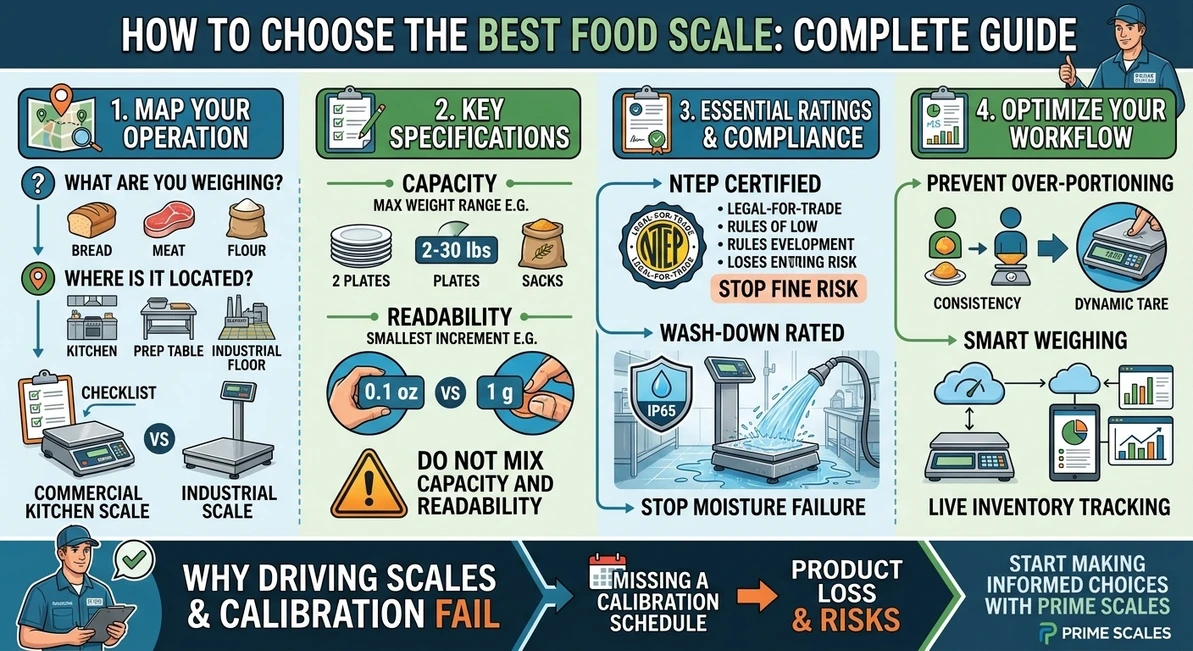
How to Choose the Best Food Scale for Better Accuracy, Portion Control & Food Safety
You are losing product every single day, and you might not know it. A restaurant over-portions by ha …1st Sep 2026 -
Are Medical Scales Giving Accurate Results? A Guide to Calibration and Maintenance
You check your patient's weight. The scale reads 84kg. You adjust the medication dose. But what if t …1st Sep 2026 -
Types of Medical Scales: Choosing the Right Scale for Hospitals, Clinics, and Healthcare Facilities
A patient comes in for a routine checkup. The nurse records their weight. The doctor adjusts medicat …30th Jul 2026