Buying a Food Scale? Compare the Best Options for Every Food Business
Running a kitchen or bakery is hard work, and every single gram counts.
If your scale reading is wrong, you lose money. A heavy pour of spices or a slightly too-big steak adds up fast. Over a year, that small amount of waste costs your business thousands of dollars.
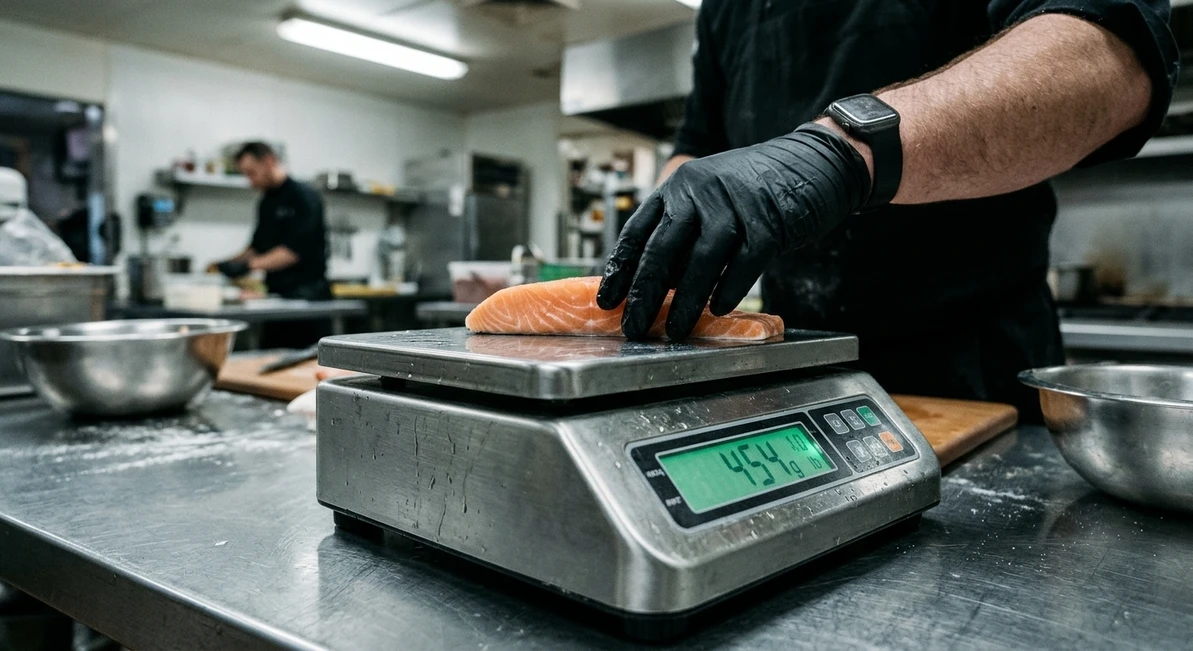
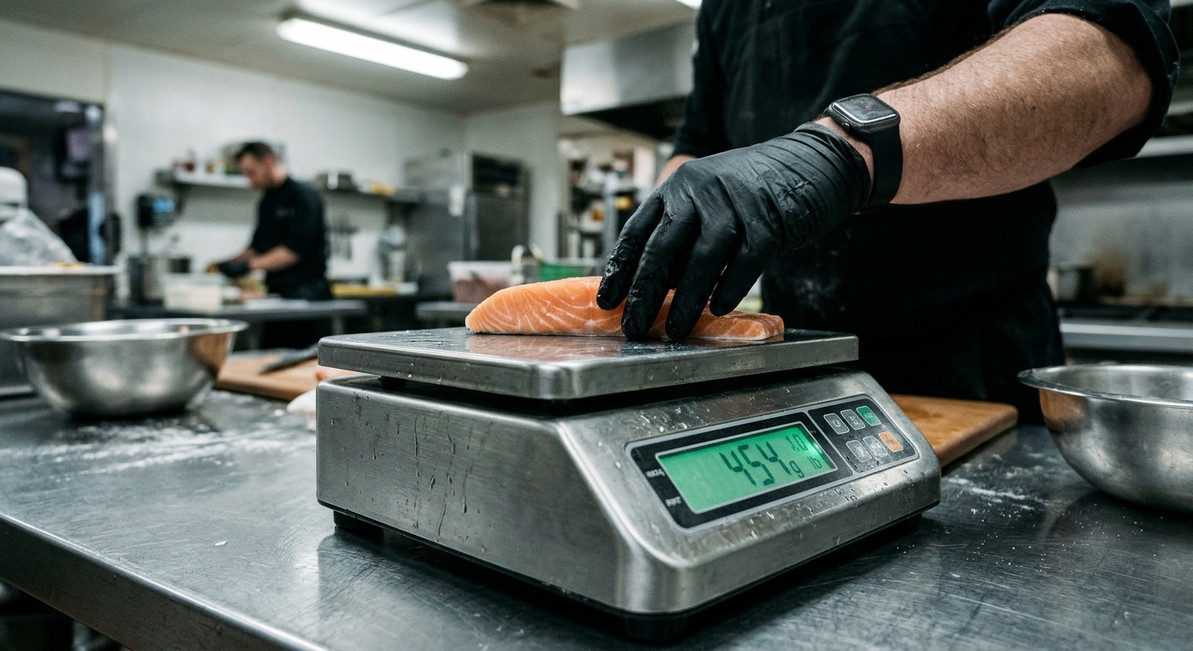
The right digital kitchen scale stops food waste, passes health inspections, and speeds up your cooks. The best food scales have waterproof washdown protection, tough stainless steel, and NTEP-certified legal-for-trade accuracy so your portions are always right.
We built Prime Scales because we saw too many food shops buy cheap scales that rust or break early. Here is everything you need to know to pick the right tool for your kitchen.
Key Takeaways
- Get waterproof: A waterproof commercial food weighing scale with washdown protection survives harsh washdown routines.
- Choose stainless steel: Stainless steel weighing scales fight off rust and harsh cleaning chemicals.
- Know the laws: Selling food by weight means you need an NTEP-certified food scale.
- Match your weight: Do not put super heavy items on a tiny counter scale.
Why Cheap Kitchen Scales Cost You Money
Normal home scales break fast in a real restaurant.
Kitchens are messy places. Flour gets everywhere, hot grease splashes on the counters, and cleaning crews spray the whole room down with heavy water hoses every single night.
A cheap plastic scale gets wet inside. It ruins the tiny parts and goes out of calibration in just a few weeks.
If your portion control scale is off by even a tiny bit on expensive meat, your food costs shoot straight up. Investing in proper industrial equipment protects your margins from day one.
The 4 Main Types of Commercial Food Scales
You need to pick the right tool for your specific job. Different tasks require completely different designs.
1. Compact Portion Control Scales
These sit on bakery tables and sandwich lines.
They are small and fast. Many have red, green, and yellow lights so workers know instantly if a portion is too heavy or too light.
2. Heavy-Duty Bench Scales
Do you mix huge bowls of dough or lift heavy pots of soup? A tiny counter scale will not work here.
Bench scales have bigger platforms and much stronger sensors built to hold heavy weight all day long without straining the internal parts.
3. Industrial Floor Scales
If big trucks drop off heavy pallets of meat, cheese, or vegetables at your back door, you need heavy-duty industrial floor scales. These rugged industrial food scales sit flat on the floor so you can roll a heavy hand truck right over them safely.
These sit flat on the floor so you can roll a heavy hand truck right over them safely.
4. Stainless Steel Counting Scales
Do you sell small items like candies, nuts, or small baked goods in pre-packaged bags?
These scales calculate piece counts instantly by weight, saving your team from counting hundreds of tiny items by hand during a rush.
Must-Have Features in Commercial Food Scales
Do not buy a scale for your business unless it has these specific features:
- Stainless Steel: Stainless steel weighing scales do not rust. They stay clean and sanitary when they touch vinegar, citrus, or raw meat juices.
- Waterproof Washdown: Kitchens need deep cleaning every single night. A waterproof commercial weighing scale with washdown protection lets you spray it with water and soap without breaking the inside parts.
- NTEP Certified (Legal for Trade): If you sell food straight to customers by weight, like at a deli counter or butcher shop. Your scale must be an NTEP-certified food weighing scale by law.
- Good Batteries: Power cords get pulled and tripped over in busy kitchens. A strong rechargeable battery keeps your station working even if the power acts up.
Compare the Best Commercial Food Scale Options
|
Scale Category |
Best For |
Material |
Washdown Safe? |
NTEP Certified? |
|
Portion Control Scales |
Prep lines, bakeries |
Stainless Top |
Splashproof |
Yes (Available) |
|
Heavy-Duty Bench Scales |
Big pots, bulk food |
Heavy Steel |
Yes |
Yes (Available) |
|
Floor Scales |
Back doors, pallets |
Steel Deck |
Heavy Spray |
Yes (Available) |
|
Waterproof Washdown Scales |
Seafood, meat prep |
Full Stainless |
Fully Submersible |
Yes |
How Often Should You Calibrate?
All scales drift over time because of heavy shaking, temperature shifts, and accidental drops.
Keep your scale accurate by following this simple plan:
- Every Morning: Put a known test weight on the center before you start cooking to make sure it reads right.
- Every Month: Run a full test using certified weights across the whole platform to check for corner errors.
- Check the Law: If you sell food to customers by weight, check your local rules on official scale testing and recertification.
Conclusion
Stop losing money to bad portions and broken gear.
Look at your kitchen counters right now. Are your scales rusting, fogging up, or taking too long to give a number?
Upgrade your setup today by checking out our food scales or looking at heavy-duty options at Prime Scales to find the right tool for your business.
Frequently Asked Questions
1. How accurate should a commercial food scale be?
Most kitchen scales measure down to 0.1 grams for baking or 1 gram for general food portions. Pick the accuracy that fits your recipes best.
2. Do commercial food scales need to be NTEP certified?
Only if you sell food directly to customers by weight. If you only use it in the kitchen to make recipes, certification is optional.
3. Are stainless steel food scales better?
Yes, stainless steel food scales are far superior for commercial environments because they resist rust from moisture and food acids, wipe clean instantly to prevent bacterial growth, and handle heavy daily impacts much better than fragile plastic housings.
4. What scale is best for portion control?
Compact digital bench scales featuring fast stabilization times, easy-to-read backlit screens, and color-coded light alerts are the absolute best choice for fast-paced prep stations where speed and accuracy decide your profit margins.
5. How often should I calibrate my scale?
Test it with a known weight every morning. Do a full check every month or three months if you use it heavily.
Recent Posts
-

Buying a Food Scale? Compare the Best Options for Every Food Business
Running a kitchen or bakery is hard work, and every single gram counts. If your scale reading is wro …29th Oct 2026 -
Sick of Bad Readings? The Fast Guide to Fixing Faulty Medical Scales
You trust your clinic’s weight scale. Right up until it lies to you. One reading says 165 pounds. An …29th Oct 2026 -
A Practical Guide To Medical Scale Maintenance & Troubleshooting
The display says 84 kg. The patient is actually 87! The nurse charts 84 because why would she doubt …6th Oct 2026