Legal-for-Trade vs. Non-NTEP Livestock Scales: What B2B Buyers Need to Know
You just bought a new digital livestock scale. It reads accurately. It looks clean. Then a Weights and Measures inspector walks into your livestock auction and tells you to stop all commercial transactions immediately. That scale you trusted was never approved for trade. Now you have angry buyers, delayed sales, and a compliance problem you didn't see coming.
This happens more than people in the agricultural trade admit. The difference between legal-for-trade cattle scales and standard farm scales is not just a sticker. It is a legal line. If your business weighs animals to set a sale price, you need to understand this before you buy. Always trust a certified supplier like Prime Scales to buy legally approved Ag scales for your farm.
Key Takeaways
- NTEP-approved scales meet federal accuracy standards required for any commercial livestock sale.
- Non-NTEP livestock scales are fine for herd management, but cannot legally set a sale price.
- Buying the wrong scale can cause failed inspections, fines, and halted operations.
- Your state enforces this, and a Weights and Measures inspector can shut down your scale on the spot.
Importance of Certification For Livestock Scales
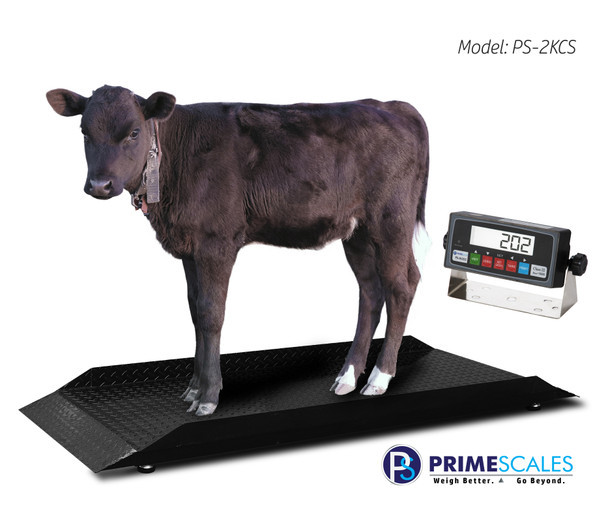
Livestock scales are commercial weighing devices used to determine animal weight. Weight determines price in nearly every livestock transaction. That makes accuracy a legal matter, not just a practical one.
When a scale sets a sale price, it becomes part of a commercial transaction. Federal and state law then require it to meet specific standards set by the National Conference on Weights and Measures (NCWM). If a scale has not been tested and approved under those standards, using it to sell animals is not legal, regardless of how accurate it seems.
Meaning of NTEP for Cattle Scales
NTEP stands for National Type Evaluation Program. It tests whether a scale model meets legal requirements for commercial use. When a scale passes, it receives a Certificate of Conformance, making it an NTEP-certified scale. Individual units must also be calibrated and sealed by a licensed technician before use in commerce.
Business Risks of Non-Compliance
A non-NTEP livestock scale has no Certificate of Conformance. It was never tested under commercial accuracy requirements. Some read accurately. But none meet the legal standard for setting a trade price. Using one in a commercial sale is a violation.
What Separates Legal-for-Trade From Non-NTEP
"Legal-for-trade" and "NTEP approved" are related but not identical. NTEP approval means the scale model passed federal testing. Legal-for-trade means the specific unit in your facility has been calibrated, sealed, and inspected for commercial use in your state.
|
Feature |
Legal-for-Trade Scale |
Non-NTEP Scale |
|---|---|---|
|
NTEP Certificate of Conformance |
Yes |
No |
|
Can set a commercial sale price |
Yes |
No |
|
Passes state weights & measures inspection |
Yes |
No |
|
Suitable for herd management only |
Yes |
Yes |
|
Required at livestock auctions |
Yes |
Not accepted |
|
Needs licensed technician calibration |
Yes |
Not applicable |
The practical rule: if money changes hands based on weight, you need a legal-for-trade scale.
Who Needs NTEP-Approved Animal Scales
Not every operation needs certification. But if your business does any of the following, you do.
Operations That Must Have Certified Scales
- Livestock auction houses: every transaction depends on certified weight.
- Feedlots: cattle are bought and sold by weight at multiple points.
- Commercial livestock dealers: any business selling animals by weight needs certified equipment.
Farms That Can Use Non-NTEP Scales
Farms that only weigh animals for internal records tracking growth or monitoring health are generally not required to use NTEP-certified scales. In those cases, a reliable non-NTEP livestock scale works fine.
The line is clear:
Commercial sale = certified scale
Internal use = your choice
Modern Digital Livestock Scale Technology
Older mechanical cattle weighing scales used springs and analog dials. They drifted and required constant manual calibration. Modern digital livestock scales use load cells and a digital weight indicator, which are more stable, more accurate, and easier to certify under NCWM standards.
Key Technical Features on Certified Digital Scales
- Zero-tracking: adjusts automatically so the scale reads zero with no weight on it
- Tare weight function: subtracts pen or crate weight so you read only the animal's weight
- Sealed calibration: cannot be changed without breaking a seal, which is required for legal-for-trade use
For simple and Portable NTEP-certified livestock scale requirements, these features are mandatory, not optional.
How Inspectors Evaluate Scales
A Weights and Measures inspector from your state's Department of Agriculture compliance office can visit at any time. They check the NTEP Certificate of Conformance on the data plate, verify calibration seals are unbroken, and run test weights against accepted tolerance levels.
If anything fails, they red-tag your scale. A red-tagged weighbridge at a livestock auction stops every transaction until the scale passes re-inspection. That is not a minor inconvenience; it is a full business disruption with real financial consequences.
What Certification Does Not Guarantee
NTEP certification does not mean a scale is perfect. It means the model met a standard under test conditions. In real-world use, muddy feedlot scales, animals that won't stand still, and even certified scales drift and need regular recalibration.
Buying an NTEP-approved scale is right for commercial use. But skipping annual calibration service means your certified scale can still give bad readings. Certification is the floor, not the ceiling.
Also worth saying: some buyers overspend on livestock weight scales for cattle with features they will never use. If you only weigh animals for internal tracking, not for agricultural trade. A non-NTEP scale may genuinely serve you better. Buy for your actual use case.
Conclusion
If your business sells animals by weight, you need a legal-for-trade cattle scale. NTEP certified, properly calibrated, and state-approved. Using anything else is a compliance violation that a Weights and Measures inspector can act on immediately.
Three steps before your next purchase. First, confirm whether your use case requires a legal-for-trade scale or if a non-NTEP fits. Second, verify that any cattle scales for sale carry a current NTEP Certificate of Conformance, and check the data plate. Third, schedule calibration with a licensed technician before commercial use.
The wrong scale is not a bargain. It is a problem waiting to happen.
Frequently Asked Questions
1. What does the "not legal-for-trade" scale mean?
A not legal-for-trade scale is not certified for commercial use. It cannot legally set a price in any transaction. Using one in a sale violates state weights-and-measures laws. It is fine for internal tracking only.
2. What makes a scale legal-for-trade?
It must hold an NTEP Certificate of Conformance, be calibrated by a licensed technician, and pass state inspection. All three conditions must be met before commercial use.
3. Can I get fined for using a non-certified scale at a livestock auction?
Yes. An inspector can red-tag your scale, halt all commercial weighing, and issue fines. Repeated violations can result in higher penalties and licensing consequences depending on your state.
4. Do small farms need NTEP-approved scales?
Only if selling animals by weight. Farms using scales purely for internal herd management are generally exempt. Confirm your specific obligations with your state's Department of Agriculture.
5. How often do legal-for-trade livestock scales need recalibration?
Most states require annual recalibration by a licensed technician. High-traffic operations may need more frequent service. A broken or expired calibration seal can fail your equipment during a state inspection immediately.
Recent Posts
-

How to Choose the Best Food Scale for Better Accuracy, Portion Control & Food Safety
You are losing product every single day, and you might not know it. A restaurant over-portions by ha …1st Sep 2026 -
Are Medical Scales Giving Accurate Results? A Guide to Calibration and Maintenance
You check your patient's weight. The scale reads 84kg. You adjust the medication dose. But what if t …1st Sep 2026 -
Types of Medical Scales: Choosing the Right Scale for Hospitals, Clinics, and Healthcare Facilities
A patient comes in for a routine checkup. The nurse records their weight. The doctor adjusts medicat …30th Jul 2026